


SAPPHIRE: The Gemstone for September
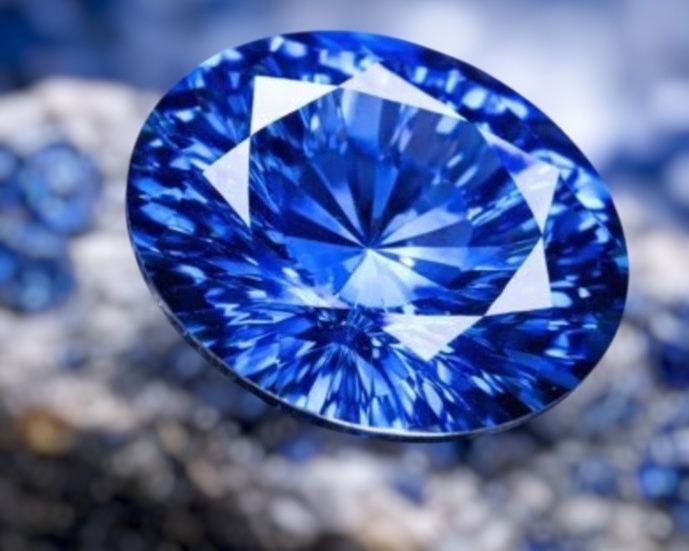
The sapphire is the official gemstone of September. It belongs to the corundum family—the same family as the ruby—and is one of the hardest gemstones in existence (ranking 9 on the Mohs scale), second only to the diamond. This durability makes it perfect for everyday jewelry. While the deep blue variety (particularly the “Royal Blue” shade) is the most famous, sapphires occur naturally in a wide range of colors: pink, yellow, green, purple, orange (including the rare Padparadscha), and even white. However, the deep blue sapphire remains the most beloved; a symbol of elegance and depth, it pairs beautifully with both minimalist styles and more sophisticated outfits.
Since ancient times, it has been regarded as a symbol of wisdom, mental clarity, and the pursuit of truth. It represents loyalty in love, protection against adversity, and inner peace.
For centuries, kings, queens, and religious leaders have worn it as an emblem of nobility and divine power.
The sapphire is a refined choice for those seeking jewelry with profound meaning—ideal for celebrating a personal milestone, an anniversary, or a September birthday.

PEARL: June’s Lucky Charm
Those born in June are fortunate to have the pearl as their birthstone.
Natural pearls in the wild are very rare. For a pearl to form, an intruder, such as a grain of sand, must enter the oyster. The oyster reacts and secretes a layer of carbon carbonate, the mother-of-pearl.
At the beginning of the 20th century, Kokichi Mikimoto invented a process that allowed humans to cultivate pearls by artificially introducing an irritant into the mollusk.
There are four types of cultured pearls:
- Tahitian pearls (cultivated in French Polynesia);
- Akoya pearls (cultivated mainly in Japan);
- Freshwater pearls (cultivated mainly in China);
- South Sea or Australian pearls.
A symbol of natural beauty, generations of Chinese empresses used it to promote skin radiance.
Today, many cosmetics brands use mother-of-pearl-derived products in their beauty products.
The pearl symbolizes natural beauty.

Emerald, the precious stone of the month of May
The emerald is the gem of the month of May, a stone with millennia of allure that a beauty-loving civilization like Ancient Egypt discovered and used as an ornamental stone for jewelry and architectural decorations. The Egyptians also believed it had magical powers that, through purification rituals, could cure illnesses, and represented immortality, reincarnation, and fertility. It was also believed that if placed under the tongue, it could help predict the future and improve memory and expressive ability. Emeralds came from mines in Egypt, still known today as Cleopatra’s mines, which would be exploited for many centuries by the Greeks and Romans. Today, these mines are exhausted, but Egyptian emeralds would not be worthy of the modern jewelry market. They were too low-quality to extract stones worthy of the beauty found today in Colombian or African emeralds.
It was around 1500 that the conquistadors discovered the Colombian mines of Muzo. and Chivor, raiding the South American land and people to bring the gems to India, where even today most of the raw minerals destined for cutting for the jewelry industry are sourced. The cut almost always used to best showcase the emerald is the stepped rectangular cut, known precisely as the “emerald cut.” Today, even emeralds from Zambia display the intense color and the most characteristic and precious hue of this gem.
April’s lucky stone: diamond
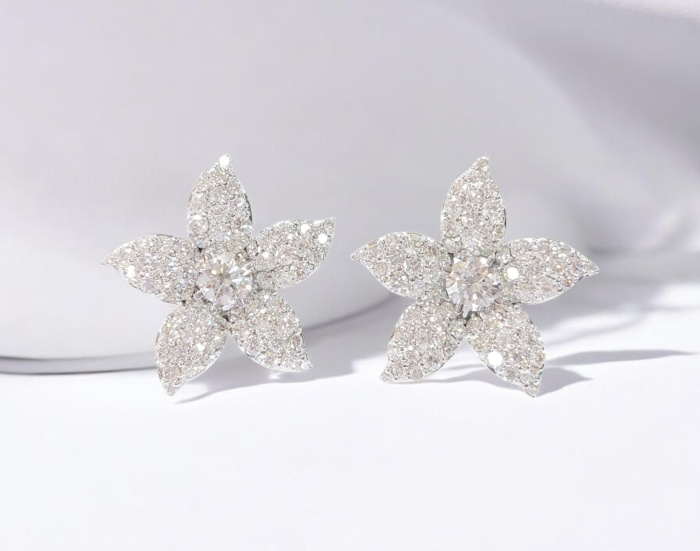
The gemstone for the month of April is the Diamond, an eternal symbol of strength, purity, love, and invincibility. Composed of pure carbon, it is the hardest mineral in the world, ideal for celebrating those born in April or as a precious gift.
Meaning: Derived from the Greek adamas (“indomitable” or “invincible”), it represents eternal love, courage, and strength.
Characteristics: It is the hardest gemstone in existence (hardness 10 on the Mohs scale), 140 times more resistant than sapphire and ruby. A symbol of purity, often associated with transparency and light.
Symbolic meaning: It is the traditional gemstone for the month of April, often associated with the signs of Aries and Taurus.
Uses: Not only for marriage proposals, but also as a stone symbolizing excellence, strength, and wisdom.
Origin: Diamonds have been mined and traded in India since the 4th century BC. Indian supplies declined in the 1700s, with Brazil becoming the largest supplier until the 1800s. South Africa then became the largest source of diamonds after the discovery of a large deposit in Kimberley in 1860. Other major sources of diamonds include Russia, Australia, Canada, South Africa, Botswana, Namibia, and Lesotho.

Ptolemaic earrings
These Ptolemaic earrings feature a winged Eros holding a small sphere, perhaps a fruit or a ball, surmounted by a green chalcedony bead and a decorative plate in the form of a palmette. This stylized leaf, or lotus, is a classic example of the era’s hybrid style, beading Greek and Egyptian motif. The stone was a deliberate choice: its vibrant color symbolized fertility and rebirth, perfectly complementing Eros, the god of desire and procreation.

March Gemstone: Aquamarine
The gemstone for the month of March is aquamarine, a stone from the beryl family, which also includes the emerald. Its name derives from the Latin “aqua marinus,” meaning seawater. Its color is reminiscent of the ocean, ranging from colorless to transparent, light blue, deep blue, and aquamarine. Unlike other gems in which opacity is sought after, in the case of aquamarine, transparency is what gives it value. Aquamarine deposits are found primarily in Brazil, Nigeria, Madagascar, Pakistan, and Afghanistan. Very large crystals have been discovered, and the largest gemstone discovered in Brazil weighed over 110 kg. Aquamarine has a hardness of 7.8 on the Mohs scale and is unanimously acclaimed by jewelers. It is often set in white gold or silver to enhance its brilliance.
Aquamarine is an ideal stone for those born in March, celebrating spring with its light, vital energy. Its blue hue has made this gem a talisman for sailors, which is why it is commonly a symbol of protection, calm, and tenderness.

Amethyst, February’s Gemstone
The gemstone of the month for February is amethyst, a variety of quartz with a characteristic purple color, ranging from delicate lilac to intense violet. A symbol of serenity, balance, and wisdom, it was anciently believed to protect against drunkenness and bring mental clarity. It is a much-loved gemstone in jewelry for its allure.
Meaning and symbolism: Associated with calm, inner peace, sincerity, and personal emancipation.
Origin of the name: Derived from the Greek amethystos, meaning “not drunk”.
Color: It is prized for its shades of purple, which can range from reddish purple to grayish violet.
Uses: Very popular for rings, necklaces, and earrings, often set in rose gold or silver, it also pairs beautifully with yellow gold and platinum, lending timeless elegance and a touch of refinement to any piece of jewelry. It can be paired with other precious stones, such as diamond or tourmaline, creating unique and captivating color combinations.
Properties (according to crystal therapy): Considered a calming agent, it helps reduce stress, and promotes meditation and creativity.
Main sources of Amethyst sources include Brazil, Uruguay, and Zambia, with deposits also found in Russia and various regions of Africa.
This gemstone has been admired and worn by personalities such as Queen Victoria of England and the famous actress Elizabeth Taylor, bestowing upon them a timeless elegance and magnetic sophistication.

Garnet, the stone of January
The birthstone of January is the garnet, a deep red gemstone (similar to pomegranate seeds, hence the Latin name granatus), that symbolizes protection, loyalty, trust, and inner strength. It was used in ancient times as a protective talisman for travelers, bringing good luck, passion, and determination.
Garnets come in a wide range of colors beyond the classic red: orange, yellow, green, and purple.
Attributed benefits:
- physical: stimulates metabolism, strengthens the immune system, and aids nutrient absorption;
- mental: instills courage, optimism, and willpower, and helps overcome difficult times and passivity;
- creativity: enhances efficiency, attention, and the ability to realize new ideas.

Nepalese Buddhist art
A 15th or 16th-century Nepalese earring made of gold, rubies, pearls, emeralds, coral, and lapis lazuli. It depicts an emerald Vishnu with four hands holding a disc, a mace, a lotus, and a conch shell, seated on a coral Garuda with outstretched arms and lapis lazuli wings. The lapis lazuli figures on either side are likely celestial beings praising him by dancing, one leg crossed over the other. Vishnu, a prominent Hindu deity, is also often depicted in Buddhist contexts, where he is considered a protector of the Dharma (Buddhist teachings) and a guardian deity. Garuda and his mount, a large bird associated with wisdom and the sky, represent intellect and the triumph over lower instincts. The presence of Vishnu and Garuda in Nepalese Buddhist art highlights the intertwining of Hindu and Buddhist traditions in the Kathmandu Valley.

Achaemenian gold
This Achaemenid gold applique in the shape of a lion’s head was originally sewn onto some piece of clothing, as seen in reliefs from Persepolis depicting the Persian king wearing robes decorated with similar jewels. Symbolizing strength and power, lions were a popular motif in Achaemenid art, and this particular design has also been found on glazed bricks found in the Persian capital of Susa. This 5 cm wide applique, dated to the 6th-4th century BCE, was donated to the Metropolitan Museum by a famous Iranian merchant who had shops in Paris, Tehran, and New York, and was the principal lender to the “Persian Art” exhibition held at the Royal Academy in London from January to February 1931.